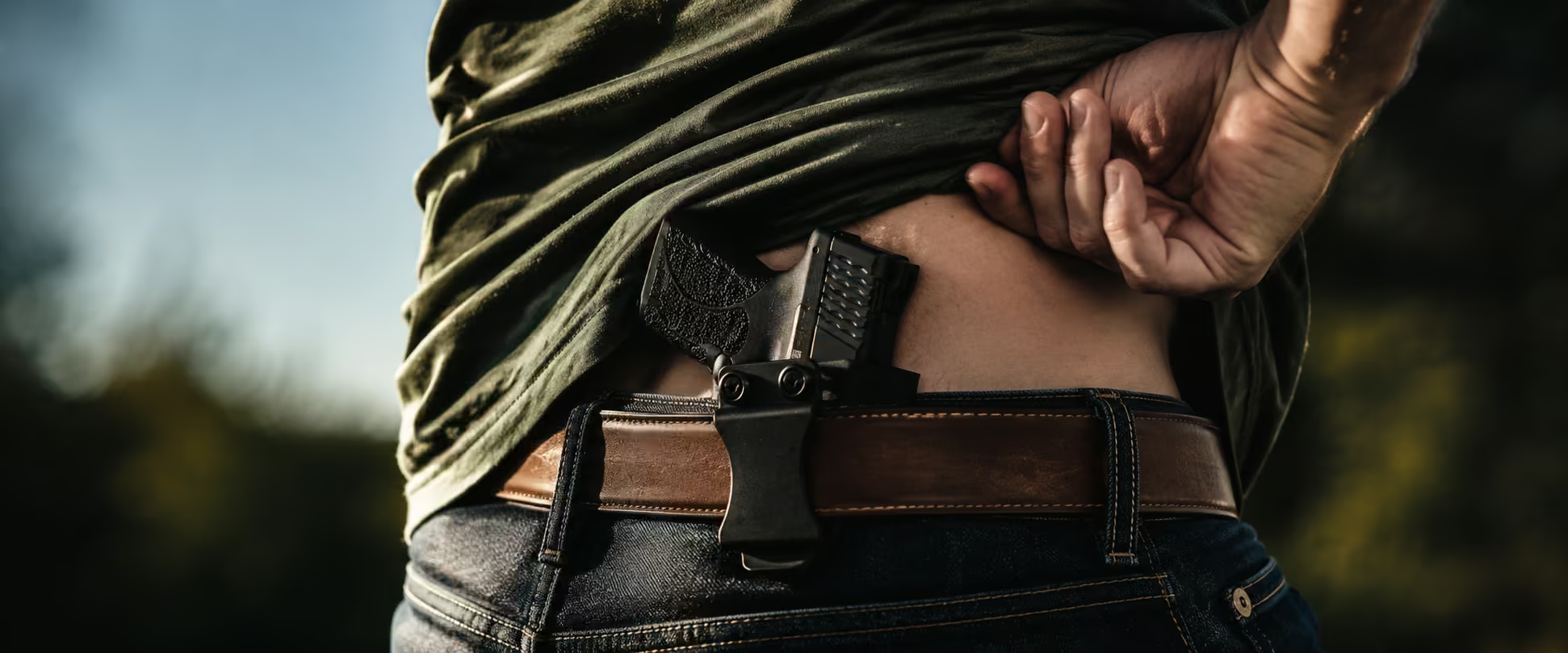
7 Most Comfortable IWB Holster For Fat Guys
Concealed carry should feel secure, comfortable, and practical — regardless of body type. But for


The Springfield Echelon was released with two barrel configurations — the 4.0C Compact and the 4.5F Full-Size — and one of the most common questions buyers have before ordering is whether they need a different holster for each. The direct answer is: no. The same IWB Hybrid Holster fits both the Echelon 4.0C and the Echelon 4.5F. This guide explains exactly why that’s the case, covers the holster’s hybrid construction in detail, and gives you a practical setup framework for carrying a full-size service pistol inside the waistband.
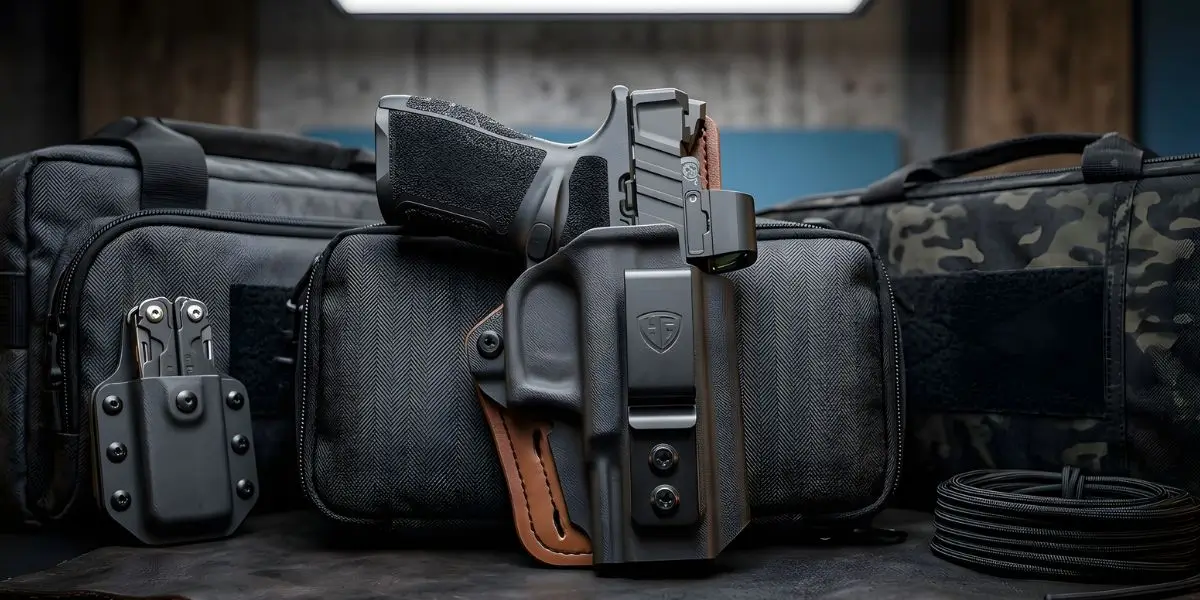
This is the question most buyers ask before ordering — and the answer comes down to understanding what determines holster fit on the Echelon platform.
The Springfield Echelon is built on the Central Operating Group (COG) chassis system — a serialized modular chassis that runs through both the 4.0C and 4.5F variants. The COG is the functional core of the pistol. Both the compact and full-size variants are built around the same central chassis dimensions, which means the frame width, trigger guard geometry, and frame contact surfaces — the three points that determine holster fit — are consistent across both.
What actually differs between the 4.0C and 4.5F is barrel length and grip module height. Neither of these changes the holster’s critical contact points:
| Dimension | Echelon 4.0C | Echelon 4.5F | Affects Holster Fit? |
|---|---|---|---|
| Barrel length | 4.0″ | 4.5″ | No — barrel rests in the muzzle end of the shell, which has clearance |
| Grip module height | Compact | Full-size | No — grip sits above the shell’s lower retention contact zone |
| Frame width (COG chassis) | Shared | Shared | Yes — identical; this is what the shell indexes off |
| Trigger guard geometry | Shared | Shared | Yes — identical; primary retention contact point |
| Slide profile | Shared | Shared | Yes — same mold fits both |
The holster is molded to the COG chassis geometry — the part that’s shared. The 0.5-inch barrel length difference between the 4.0C and 4.5F falls within the muzzle clearance zone of the shell, which is why one shell accommodates both. This is not a universal fit claim — it’s a consequence of the Echelon’s specific modular architecture.
Practical implication: If you own both an Echelon 4.0C and a 4.5F, you need one holster, not two. If you ever switch between the two configurations, your holster comes with you.
→ Springfield Echelon IWB Hybrid Holster — $79.00
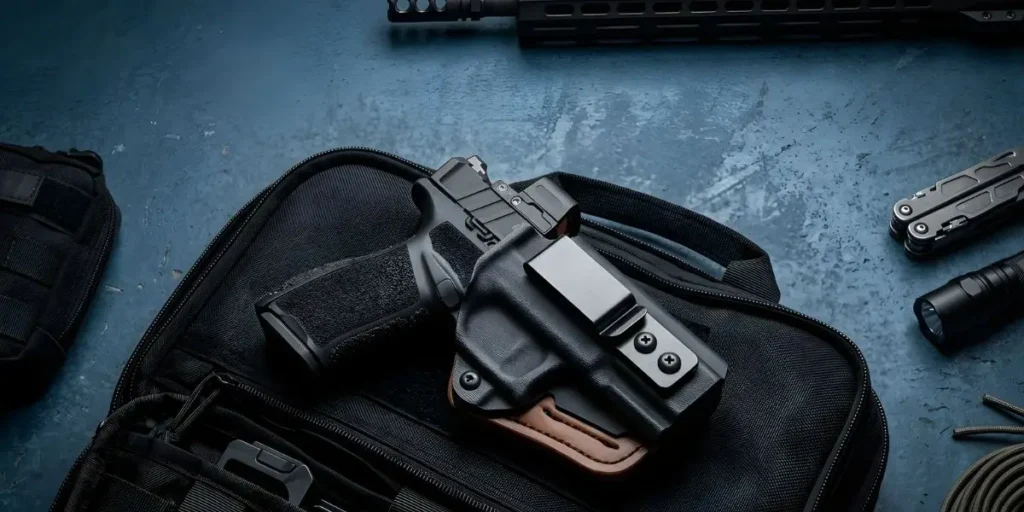
This is a hybrid construction holster — Kydex outer shell with a leather-and-foam backing on the body side. Understanding why the Echelon specifically benefits from a hybrid format (rather than a full Kydex shell) is the key to understanding the product.
A full Kydex holster places a rigid, unyielding surface directly against the torso. On a micro-compact or subcompact pistol, the contact area between holster and body is small enough that this causes minimal discomfort during extended carry. On a full-size pistol like the Echelon — with a longer frame and larger grip module — the rigid shell covers a significantly larger contact zone against the torso. Rigid contact distributed across that larger area creates pressure concentration along the shell’s edges during all-day IWB carry, particularly during seated periods.
The hybrid format solves this by splitting the work between two materials:
This break-in period — typically two to three weeks of consistent daily carry — is normal and expected. The holster’s comfort profile improves measurably during that period as the foam layer settles into shape.
The Kydex outer shell is formed at 0.08″ thickness. Key structural elements:
| Feature | Spec |
|---|---|
| Compatibility | Springfield Echelon 4.0C and 4.5F |
| Shell | 0.08″ Kydex, full trigger guard enclosure |
| Backing | Leather base + foam pad (body-facing) |
| Optic cut | Yes — compact red-dot compatible |
| Sweat guard | Behind slide, rear of frame |
| Retention | Passive friction-fit, front adjustment screw |
| Cant range | -25° to +25° |
| Ride height | Independently adjustable |
| Belt clip | 1.5-inch |
| Break-in period | 2–3 weeks |
| Colors | Black Kydex, Carbon Fiber — Right and Left Hand |
| Price | $79.00 |
One of the Echelon’s standout features is its interchangeable grip module system — Small, Medium, and Large grip modules are user-swappable, allowing shooters to adjust grip geometry, backstrap angle, and palm swell without gunsmithing.
Changing the grip module does not affect holster fit. The COG chassis — the serialized frame that the holster indexes off — is the same across all grip module sizes. Swapping from a Medium to a Large grip module changes your hand ergonomics. It does not change the chassis dimensions, trigger guard geometry, or slide profile that the Kydex shell is built around. If you change grip modules, your holster remains valid.
The one exception: aftermarket grip modules that alter the frame geometry at the chassis level could affect fit. Standard Springfield Armory grip modules for the Echelon do not create this issue.
Carrying a full-size pistol IWB is entirely practical — millions of people do it daily — but it requires deliberate setup decisions that compact carry doesn’t demand. The Echelon’s full-size frame means those decisions matter more here.
Strong-side is the most natural position for the full-size Echelon. The longer slide and grip distribute along the hip’s natural contour at this position. Start with a 5° forward cant and a mid-to-low ride height. The cant keeps the grip angled toward the strong hand for a natural draw path, and the lower ride height tucks the grip below the beltline to reduce printing under fitted clothing.
Appendix carry with the Echelon 4.5F is body-type dependent. The 4.5-inch barrel and full-size grip module require adequate torso length below the beltline when positioned at 12 o’clock. Carriers with a longer torso generally find AIWB with the Echelon manageable; shorter torsos may find the muzzle contacts the upper thigh when seated. The 4.0C’s 4-inch barrel reduces this issue by 0.5 inches — if AIWB is your preferred position, the 4.0C is the more comfortable AIWB configuration of the two.
Test seated-in-vehicle comfort before committing to daily AIWB carry with either Echelon variant.
The full-size Echelon grip is tall — and grip height is what prints most against clothing, not the slide. Ride height adjustment on this holster is worth more time than it would be on a compact. A lower ride position tucks the grip further below the beltline, reducing print at the cost of requiring a longer upward draw stroke to clear the belt. A higher position makes the draw more natural but exposes more grip. Find the balance that works for your typical daily clothing before finalizing the setting.
General starting point: drop the ride height one position lower than feels instinctively natural — most carriers initially set ride height too high on full-size pistols.
The hybrid construction requires a deliberate break-in period that full Kydex holsters don’t. Setting the right expectation prevents carriers from giving up on a holster that needs time to reach its optimal state.
What happens during break-in:
Hardware check schedule for the hybrid:
Since both variants use the same holster, the choice between the 4.0C and 4.5F for carry comes down to practical carry considerations rather than holster compatibility:
| Factor | Echelon 4.0C | Echelon 4.5F |
|---|---|---|
| Barrel length | 4.0″ | 4.5″ |
| Slide length | Shorter — less muzzle protrusion at AIWB | Longer — more relevant at AIWB seated |
| Sight radius | Slightly shorter | Slightly longer — marginal accuracy advantage |
| Ballistic performance | Near-identical at defensive distances | Near-identical at defensive distances |
| Concealability | Marginally easier under fitted clothing | Standard full-size carry demands |
| Holster | Same holster — no difference | Same holster — no difference |
Both variants use the same grip modules, same COG chassis, same magazine pattern, and same sights. The choice between them is personal preference on barrel length — not a holster decision.
Does the Echelon 4.0C holster fit the 4.5F?
Yes. The Springfield Echelon IWB Hybrid Holster fits both the 4.0C Compact and the 4.5F Full-Size. Both variants share the same COG chassis dimensions, frame width, and trigger guard geometry — the contact points the shell is built around. The 0.5-inch barrel length difference falls within the muzzle clearance zone of the shell.
Why is this a hybrid holster and not full Kydex?
The Echelon’s full-size frame covers a larger contact area against the torso than a compact or subcompact would. Full Kydex concentrates pressure along rigid edges over that larger zone during extended carry. The hybrid’s leather-and-foam backing distributes that contact across a softer, conforming surface, which improves all-day comfort specifically on full-size platforms.
Does changing the grip module affect holster fit?
No. Standard Springfield Armory grip module swaps (S/M/L) change grip ergonomics but do not alter the COG chassis dimensions that the shell indexes off. The holster remains valid across all grip module sizes.
How long is the break-in period?
Approximately two to three weeks of consistent daily carry for the foam layer to fully conform to your carry position. The holster works from day one — it simply improves materially over the break-in period.
Can I carry the Echelon in appendix position?
Yes, but it requires adequate torso length below the beltline, particularly with the 4.5F’s longer barrel. Test seated comfort in a vehicle before committing to daily AIWB carry. The 4.0C is marginally more practical for AIWB due to its shorter muzzle profile.
Does the optic cut affect fit if I’m running iron sights?
No. The optic cut in the Kydex shell does not affect retention geometry or overall fit for iron-sight Echelon variants — it is a relief cut sized for compact red-dot footprints only.
→ SHOP Springfield Echelon IWB Hybrid Holster — $79.00 (fits 4.0C and 4.5F)
Concealed carry should feel secure, comfortable, and practical — regardless of body type. But for
Best IWB Holster for the Glock 43 and G43X: Slimline Kydex Hybrid Guide The Glock
Ranked and Compared Spending $500 or less used to mean accepting meaningful compromises — rough
Best IWB Holster for the Tisas Zigana PX9: Dedicated Kydex IWB Guide The Tisas Zigana